

Check in with the life you’re building.
Dear Me helps you picture where you want to be by year-end, then use that picture as a quarterly check on what to keep doing, add, or change.
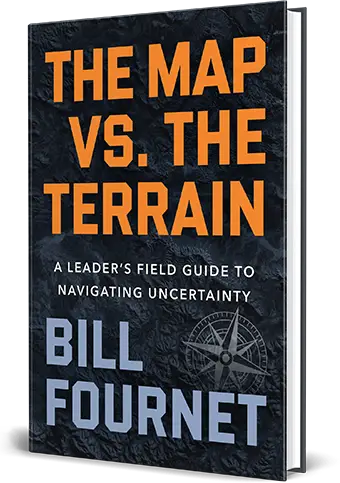
Bill writes about Dear Me in chapter 18.
Get the book →It’s easy to start the year with good intentions and lose sight of them once work, deadlines, and everyday life take over.
Dear Me gives you a way to step outside the immediate pressure and picture where you want to be by the end of the year. Write a letter as if you’re already there. Describe what you hope is true across three areas: your organization or team, you at work, and you personally outside of work.
Then come back to that same letter each quarter. Use it to compare where you are with where you said you wanted to be, and decide what to keep doing, add, or change.
The goal is to keep your choices connected to the direction you want the year to take.
Set aside 60 to 90 uninterrupted minutes and open a notebook or blank document. Give yourself enough space to reflect without squeezing the exercise between other demands.
This works best when you can think beyond what’s urgent right now.
Write the letter as if you’re already at the end of the year. Describe what you hope is true across three areas: your organization or team, you at work, and you personally outside of work.
Get specific. Consider what you accomplished, what you learned, how you feel, how you showed up, and what’s different from the beginning of the year.
Write enough detail that you’ll have something meaningful to compare against later.
Print four copies of the letter and label them for 3/31, 6/30, 9/30, and 12/31. Schedule time on those dates to come back to the letter.
Keep the letter itself unchanged. You want each review to compare your current reality with the direction you originally set.
At each quarterly check-in, reread the letter and look at what’s changed.
Ask yourself:
What’s going well?
What’s been pushed aside?
What surprised me?
How did I respond?
Use the letter as a reference point, not a scorecard.
Choose what you need to keep doing, add, or change for the next quarter.
Keep the list short enough that it can influence your actual choices over the next 90 days. The point isn’t to rewrite the vision every quarter. It’s to adjust how you’re moving toward it.
Watch your footing
PowerPlays are the techniques Bill teaches in his keynotes, workshops, and executive coaching engagements with organizations across the country.
Monthly newsletter
Practical application for leading through uncertainty, once a month.