

A fast discipline for making a recommendation decision-ready.
3D Decision Framework helps teams deliver decision-ready recommendations by answering key questions, validating assumptions, and clarifying risks <em>before</em> asking for a decision.
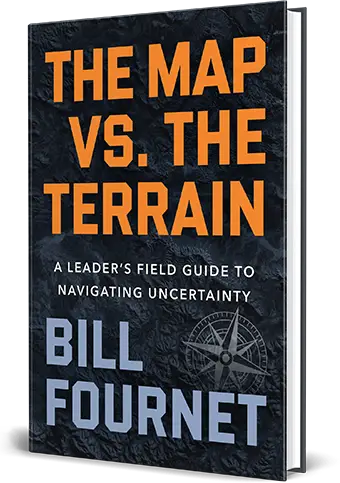
Bill writes about Decision-Ready: The 3D Decision Framework in chapter 9.
Get the book →When you bring a recommendation forward, the quality of the decision often depends on the quality of the thinking you bring with it.
If you haven’t considered the obvious questions, tested the assumptions behind your recommendation, or thought through the risk of acting now versus waiting, the decision-maker has to do that work in the room. That slows the conversation and can reduce confidence in your recommendation.
3D helps you prepare before you ask for a decision. It focuses your thinking on three things:
1. The key questions and assumptions behind the recommendation
2. What you’ve answered or validated
3. The risk of deciding now versus waiting
That preparation gives the decision-maker a clearer picture of what’s known, what’s still uncertain, and how much risk comes with moving now.
The goal is to make your recommendation easier to evaluate because you’ve already done the critical thinking upstream.
Look at the recommendation and ask what has to be true for it to work. Focus on the things the decision depends on: timing, cost, capacity, customer behavior, resources, constraints, or risk.
Then ask what a decision-maker is likely to question before saying yes.
Example: If your recommendation depends on a 12-month equipment lead time, that lead time is not just a detail. It’s an assumption that could materially affect the decision.
Now work through the questions and assumptions you identified. Confirm what you can, clarify what is estimated, and be explicit about what remains uncertain.
Example: If the recommendation assumes a 12-month lead time, call the supplier and verify it. If capacity is part of the plan, confirm that the capacity actually exists.
You don’t need perfect certainty. You need to know which parts of the recommendation are confirmed and which still carry uncertainty.
The decision-maker needs to understand what could happen if they act now, what could happen if they wait, and whether additional information is likely to materially change the decision.
Think through those tradeoffs before you bring the recommendation forward. Then include them so the decision-maker can see not only what you recommend, but why the timing makes sense.
When you consistently show that you’ve considered the questions, validated the assumptions, and thought through the risk, you build confidence in the quality of your recommendations and credibility as someone who brings decision-ready thinking.
The core technique stays the same — but how you apply it shifts depending on your role, your team, and your environment.
If your team regularly brings you recommendations that still require you to uncover assumptions, ask basic follow-up questions, or clarify the risk, give them the 3D questions before the next decision comes to you.
Ask them to bring the recommendation with the key questions and assumptions identified, the critical assumptions validated, and the risk of acting now versus waiting clearly stated.
Over time, this shifts more of the thinking upstream. Your team gets better at preparing decision-ready recommendations, and you spend less time doing the due diligence for them in the meeting.
Watch your footing
PowerPlays are the techniques Bill teaches in his keynotes, workshops, and executive coaching engagements with organizations across the country.
Monthly newsletter
Practical application for leading through uncertainty, once a month.