

Check your alignment before you chart what’s next
FITREV is a structured leadership-team assessment that reveals where leaders are aligned, where perspectives differ, and what needs attention before those gaps affect strategy or execution.
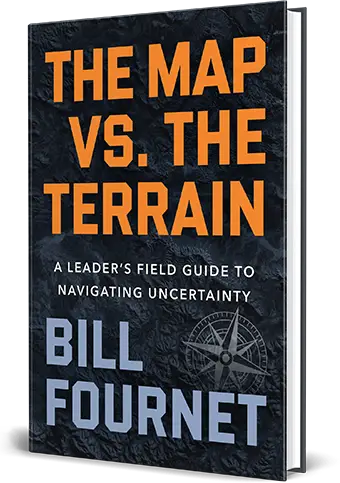
Bill writes about Organizational Fitness Review (FITREV) in chapter 13.
Get the book →FITREV is a structured leadership-team assessment built around ten questions about organizational performance and leadership effectiveness. Each leader answers the questions independently before the team compares responses.
The value is not in reaching the same answer on every question. It is in seeing where perspectives align, where they diverge, and what those differences may be signaling about the organization.
Once the gaps are visible, the team can decide what needs attention and turn those findings into specific actions for strategic planning, leadership priorities, or execution.
Download the FITREV worksheet and give the ten questions to each member of your leadership team. Answer them yourself as well.
Ask everyone to respond independently and thoughtfully before the group discusses the questions together. The goal is to capture each person’s perspective as clearly as possible before the team begins influencing one another’s answers.
Bring the responses together and look for two things: where the team sees the organization similarly and where perspectives differ.
Areas of agreement help confirm where the team has a shared understanding. Differences are often more useful because they can reveal assumptions, experiences, or concerns that have not yet been discussed.
Do not treat divergence as something to eliminate immediately. Use it as a signal that the team may need to understand the issue more clearly before deciding what to do about it.
Review the areas where perspectives differ and ask which ones could affect decisions, priorities, or execution. Focus on the gaps that have the greatest consequence if they remain unresolved.
Then translate those into specific actions, priorities, or changes and carry them into the strategic planning process.
Watch your footing
PowerPlays are the techniques Bill teaches in his keynotes, workshops, and executive coaching engagements with organizations across the country.
Monthly newsletter
Practical application for leading through uncertainty, once a month.