

Lead across differences without losing alignment.
Translate, Don’t Tolerate helps leaders turn differences in experience, expectations, strengths, and communication into aligned contribution.
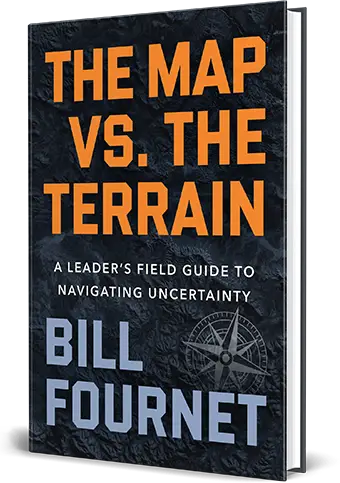
Bill writes about Translate, Don’t Tolerate in chapter 16.
Get the book →People don’t arrive at work with the same assumptions about what good work looks like, how quickly to respond, how much direction they need, or what ownership means. Those expectations are shaped by experience, generation, culture, and the environments where people learned how work gets done.
That difference can be useful. One person may bring structure, another autonomy, another collaboration, and another transparency. The leadership challenge is making sure those strengths contribute to the same mission instead of pulling the team in different directions.
Translate, Don’t Tolerate gives you a practical way to do that. Surface the assumptions people are carrying. Make expectations behavioral and visible. Match strengths to the work. Reconnect individual contribution to shared purpose. Adjust communication so people receive the clarity and context they need.
The goal is to create enough clarity that different people can work in different ways while still moving toward the same outcome.
Ask people to describe what important expectations mean in practice.
Ask:
What does excellent work look like in this role?
What does responsiveness mean here?
What does ownership look like?
Give people room to answer before defining the standard. Listen for where assumptions differ.
Shared language starts with understanding the assumptions already in the room.
Turn broad expectations into observable actions.
Instead of: “Be responsive.”
Define: Respond to internal messages within one business day. If more time is needed, acknowledge the message and give a timeline.
Instead of: “Show ownership.”
Define: Close the loop on commitments and raise obstacles before they become delays.
The chapter is explicit here: consistency improves when leaders define the bar in behavioral terms rather than assuming everyone shares the same definition.
Behavioral expectations give people something specific to act on.
Look at what the work requires and where each person contributes particularly well.
Ask:
Who is strongest at the capabilities this work requires?
Where are we assigning work by habit or availability?
What strengths on this team are we underusing?
Use those answers to distribute work more intentionally.
The chapter’s presentation story is a strong example: team members self-selected around research, visual design, narrative, and collaboration, which improved speed and quality.
Different strengths become more valuable when they’re aligned to the same outcome.
Help each person see how their contribution connects to the mission.
Think about what tends to matter to that person, such as impact, growth, autonomy, collaboration, recognition, or mastery, and connect that motivation to the result the team is trying to achieve.
Ask yourself: Does this person understand why their contribution matters to the outcome?
Shared purpose gives different working styles a common direction.
Pay attention to how each person best processes direction and context.
Some people benefit from structure first. Others need context first. Give both, in the order that helps the person understand and act.
Ask:
What does this person need to understand first?
How much context will help them exercise good judgment?
What format helps them process information and make decisions?
Intentional communication helps the same direction land clearly across different people.
The core technique stays the same — but how you apply it shifts depending on your role, your team, and your environment.
Generational labels can be useful context, but the stronger leadership move is to understand the assumptions beneath them.
Ask what people mean by responsiveness, ownership, work ethic, autonomy, collaboration, and good communication. Then define the standards the mission requires and leave room for different strengths and working styles inside those boundaries.
<em>Use generational differences as information about possible starting assumptions, then lead the person in front of you.</em>
Start by surfacing assumptions before deciding who or what is causing the problem.
Ask people what good work looks like, what they expect from one another, and where they experience recurring misunderstanding. Then look for expectation gaps you can clarify.
<em>Existing friction often gives you useful evidence about where translation is needed most.</em>
Experienced team members may be carrying standards they learned through years of observation and repetition. Newer team members may never have been shown those same norms.
Make the implicit explicit. Ask experienced people to describe what they recognize as strong performance, sound judgment, and good ownership in behavioral terms.
<em>Tacit expectations become teachable once someone puts words around them.</em>
Watch your footing
PowerPlays are the techniques Bill teaches in his keynotes, workshops, and executive coaching engagements with organizations across the country.
Monthly newsletter
Practical application for leading through uncertainty, once a month.