

Turn what your best people know into something every team can use.
Playbook Builder helps teams capture the context, decision logic, tradeoffs, and lessons behind repeatable work so others can apply what works without starting from scratch.
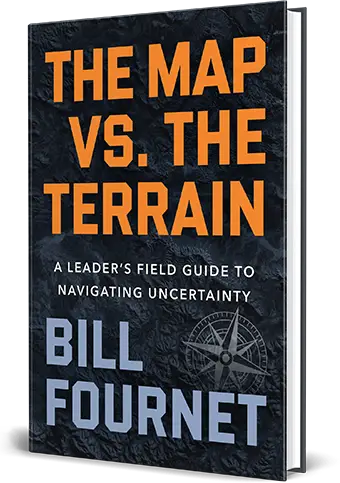
Bill writes about Playbook Builder in chapter 17.
Get the book →When teams solve a difficult problem well, a lot of the value stays with the people who were there. They remember the context, the tradeoffs, the warning signs, and the reasoning behind the decisions. That knowledge is easy to lose once the project ends or people move on.
Playbook Builder gives teams a simple way to capture that judgment while it’s still fresh. Each play records five things: context, the play, decision logic, pitfalls, and proof.
The goal is to preserve enough of the thinking behind a successful response that someone else can recognize a similar situation and make a better decision without starting from scratch.
Over time, those plays become a practical record of how the organization handles recurring challenges, helping teams transfer tacit knowledge, reduce relearning, and build capability beyond the people who originally developed it.
Start with the challenges, decisions, or situations your team faces repeatedly.
Ask:
What keeps coming back?
Where does quality depend too much on who’s in the room?
What do experienced team members know that newer people are still learning through trial and error?
Each recurring situation is a candidate for a play.
Record the conditions that made the situation what it was.
Include the constraints, signals, and factors that shaped the team’s response.
Document:
What triggered the situation?
What constraints were in play?
What signals told you it was time to act?
Context helps the next team recognize when the play applies.
Document the sequence of actions, the principles that guided the decisions, and the tradeoffs the team accepted.
Document:
What did the team do?
What principles shaped the decisions?
What tradeoffs were made, and why?
The goal is to preserve the judgment behind the action so someone else can adapt it.
Capture the places where friction showed up, assumptions failed, or the team learned something the hard way.
Document:
Where did problems occur?
What assumptions turned out to be wrong?
What should the next team watch for?
The pitfalls are often where the most transferable learning lives.
Describe the observable results that show the play worked.
Document:
What outcome tells you the play worked?
What’s the earliest sign it’s on track?
What measurable result confirms success?
Assign a steward to keep the play current, simple, and easy to find. Build the playbook into onboarding, project reviews, and recurring team conversations so people know when to use it.
The core technique stays the same — but how you apply it shifts depending on your role, your team, and your environment.
Start with the recurring situations where quality depends too heavily on a few experienced people. Build a small set of plays around those areas, then make them part of onboarding and regular team conversations.
<em>A playbook becomes useful when people actually use it to make decisions, teach others, and update how the team works.</em>
Capture the play while the context is still fresh. Bring together the people who were closest to the work and document the decisions, tradeoffs, friction, and lessons before everyone moves on.
<em>The sooner you capture it, the less the team has to reconstruct from memory.</em>
Watch your footing
The one-page Playbook Builder PDF reference, plus weekly tools and techniques to help you lead through uncertainty — from Bill's Lead for Tomorrow newsletter.
"*" indicates required fields
No spam. Unsubscribe anytime. Your information is never sold or shared.
PowerPlays are the techniques Bill teaches in his keynotes, workshops, and executive coaching engagements with organizations across the country.
The Persimmon Group
888.392.7101


Copyright © 2026 Bill Fournet. All Rights Reserved.