

Make Your Values Useful in Real Decisions
Guiding Principles turn values into clear direction your team can use when things don’t go according to plan. They help people know what matters most, how they’re expected to act, and what to protect when a difficult choice has to be made.
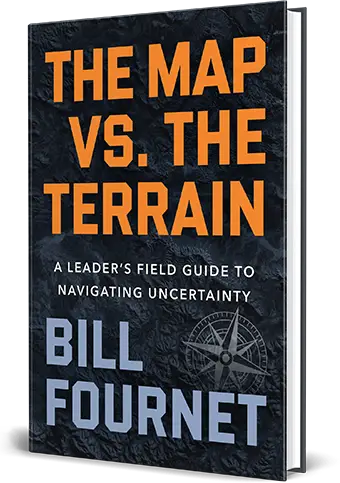
Bill writes about Guiding Principles in chapter 2.
Get the book →Guiding Principles help people make better judgment calls when the plan no longer gives them a clear answer.
Values tell people what you believe. Policies tell them what is permitted or required. Guiding Principles tell people how you expect them to act when the right choice is not obvious.
Because eventually, every plan runs into trade-offs.
Speed versus quality. Customer needs versus internal process. Ownership versus escalation. Transparency versus protecting the organization.
In those moments, people need more than a value on the wall. They need to know what matters most, what they are expected to protect, and what kind of choice the organization wants them to make.
That is what Guiding Principles provide.
A strong principle is specific enough to help someone make a real decision when the choice gets uncomfortable.
So instead of a broad value like “Customer First,” a Guiding Principle might say:
Tell customers bad news early rather than protecting our reputation.
Now the trade-off is clear. If someone has to choose between being transparent with the customer and avoiding an uncomfortable conversation, they know which way the organization expects them to lean.
A simple way to think about it is:
Mission and Intent answer, Where are we going?
The plan answers, How do we currently expect to get there?
Guiding Principles answer, When the plan does not give us the answer, what should guide the choices we make?
The goal is disciplined freedom: fewer rules, clearer judgment, and enough shared understanding that capable people can make aligned decisions without waiting for permission.
Start with recurring moments of tension rather than a list of values.
Look for places where reasonable people make different choices because the organization has never made the trade-off explicit.
Ask:
Where do we repeatedly debate the same issue?
What choices create the most inconsistency?
What do our best people do instinctively that we want others to repeat?
What behavior do we say matters but fail to protect when it becomes inconvenient?
For example:
Your team keeps debating whether to move fast or wait for more certainty. Customer issues are handled differently depending on who gets them. Some people step into problems immediately while others wait for permission.
Those recurring choices are where your Guiding Principles are likely hiding.
Turn the desired behavior into a short statement that can guide action.
Make it memorable, but do not optimize for cleverness or “marketing speak”. The person should feel it emotionally and reflectively, asking “am I living this?” A principle is useful only if a person can use it in a difficult moment.
It should answer:
What will we do?
What will we protect?
What will we choose when two good things compete?
What behavior is non-negotiable here?
Example:Surface problems early, even when the news is uncomfortable.
Test each principle against a real situation where following it could cost time, money, comfort, or political convenience.
Look at situations like:
Would we be willing to hold a high performer accountable to it?
Would this still matter if the leader were not in the room?
Example: “If you see a gap, step in rather than waiting for permission” means initiative is valued even when the org chart makes ownership ambiguous.
Introduce the principles with examples, then keep using them in real decisions.
Launch the principles with examples, then keep them alive through decisions, recognition, feedback, and correction. When a tough choice comes up, name the principle being applied. When behavior violates one, address it. What leaders tolerate becomes the real principle.
- Reference principles in decision reviews and team meetings.
- Recognize behavior that demonstrates them.
- Correct behavior that contradicts them (especially from senior or high-performing people).
- Revisit the wording only when experience shows the principle is unclear, redundant, or no longer true.
The core technique stays the same — but how you apply it shifts depending on your role, your team, and your environment.
Translate enterprise principles into the few behaviors that matter most for the work. Do not create a second culture for the project. Instead, make the existing principles concrete: how will the team surface risk, handle handoffs, resolve conflict, or step across role boundaries when the work demands it?
Watch your footing
PowerPlays are the techniques Bill teaches in his keynotes, workshops, and executive coaching engagements with organizations across the country.
Monthly newsletter
Practical application for leading through uncertainty, once a month.